
Our surnames used to tell others where we belonged or what we did. And for the first time in history, we are teaching machines to think and do our jobs. But for most, it has not yet hit home.
We are, by and large, creatures who have accepted technology and are constantly in search of simplicity in our lives. It may not have been so in the 1990s, but today technology is part of us. However, the impact of AI remains the subject of considerable speculation, both in its applications and in its social and economic effects.
When ATM machines were first introduced, we were okay with withdrawals but not so much with deposits, for some, even transfers from one account to another were dubious. Today, we have adapted to online banking, which is a great convenience. We embraced debit cards just as we did with credit cards, for more convenience. Many of us seldom visit a physical bank or carry cash.
Technology has changed consumer behaviour. We used to line up at video stores to grab the latest movie CD. Then came streaming, it was a more efficient alternative. I remember when Blockbuster Video twice turned down the opportunity to buy Netflix. A decision that they surely regretted. And when smartphones arrived in 2007, some technology executives argued that no one would pay $500 for a phone. But we did by the millions, and now we can’t wait for the next software or hardware update. But these handheld devices, even if we get frustrated with them at times, are supercomputers in your hand. Who would have thought today you could watch your favourite show and ask GPT for suggestions for dinner or ideas about next week’s presentation, while on a commuter train? Twenty years ago, it was a sci-fi depiction, and then it all got unleashed.
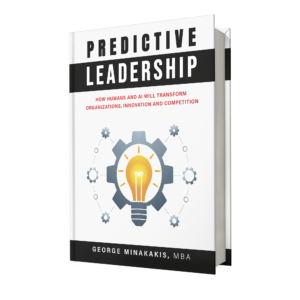
Now you may think that AI is new. No, it isn’t. We’ve used Algorithms to track and analyze data; this has been around for a few years, and most were just spreadsheets. But that too has been turned upside down. Even the software workers and their companies, who have been behind the scenes creating today’s AI capabilities, are increasingly at risk. How will this impact jobs and businesses? I’ve written about it in my new book, Predictive Leadership – How Humans and AI will Transform Organizations, Innovation and Competition.
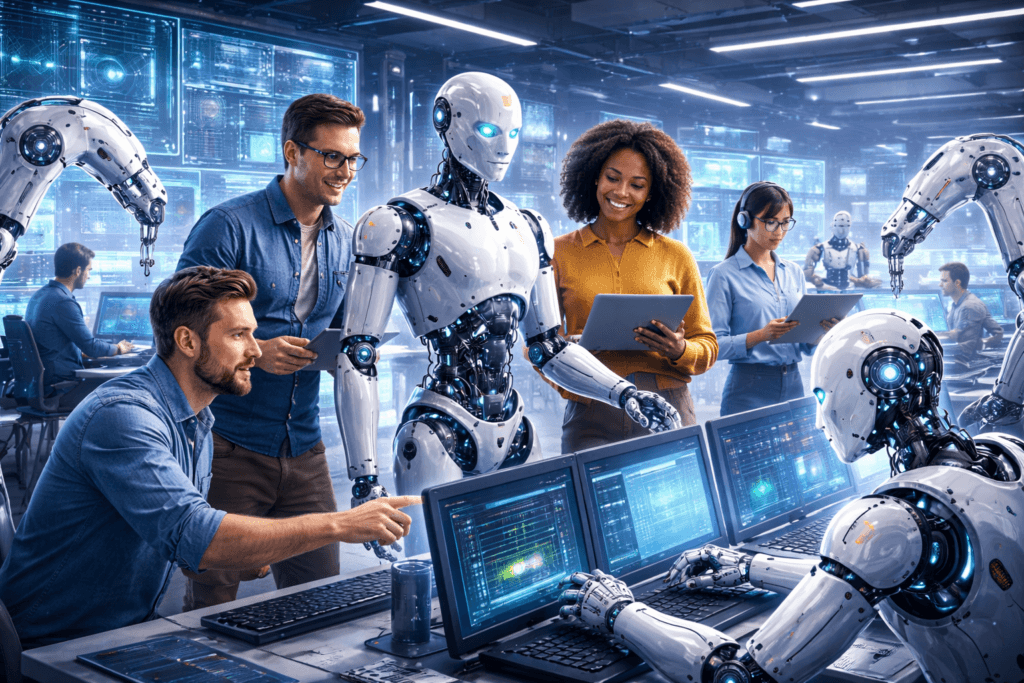
The interesting part for me is that for the first time in history, we are teaching machines to think and do our work. I am not afraid; I see opportunities within this.
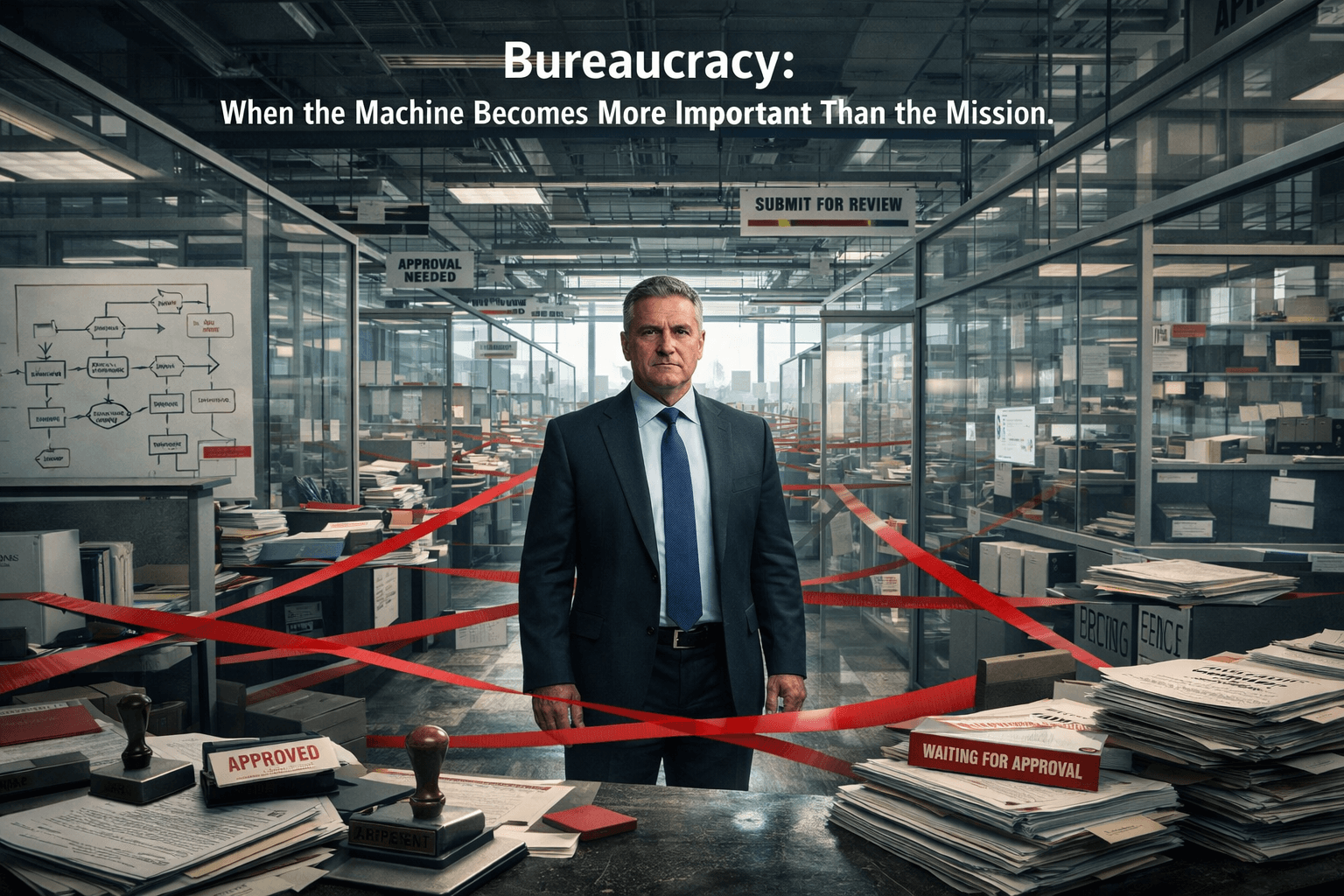
AI will be a big part of nation-building, and even the education system and municipalities will have no choice but to adapt faster. Because the social issues with the rise of AI in everything can’t wait for bureaucracy to catch up.
In the past we earned our surnames from the work and places we came from. I don’t believe we need to change our surnames just how fast we learn to adapt.
The future waits for no one and it is adopted by the very aware and astute. I have helped executives and businesses prepare for the future as a senior executive and advisor.
George Minakakis
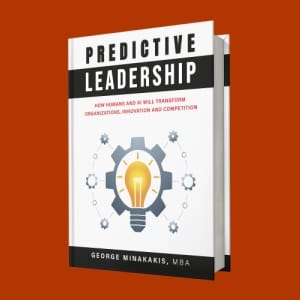
Click on the image for more information on the book or to order your copy.

CEO | MBA | Author | Advisor | Speaker | Business Visionary
George Minakakis is a Thought Leader and Keynote Speaker. His experience leading, developing, and reviving global brands make him a sought-after Executive Advisor.